
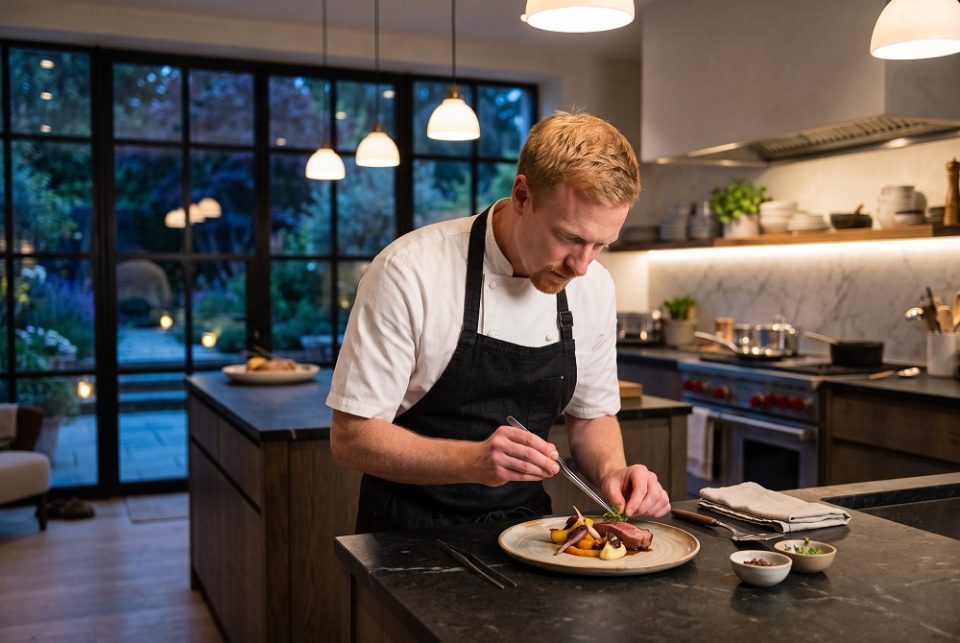
Every year, somewhere around the second week of November, my phone starts ringing with the same kind of call. Someone has agreed to host the family holiday dinner. There will be fourteen people, an oven that runs hot on the left side, and at least one guest who has recently given up dairy. They are not really asking me how to cook. They are asking me how to get through the evening.
I have cooked in a lot of other people’s kitchens, from compact Toronto condos to yacht galleys where the counter is barely bigger than a chopping board. The food changes from house to house. The problems almost never do. Here is what I tell those callers, whether or not they end up booking me.
Start With The Evening, Not The Menu
Before you open a single recipe, decide what kind of night you want. A long sit-down dinner where the table stays full until midnight? Or a looser evening, with people standing around the kitchen island holding a glass of something? Both are lovely. They need completely different food.
A plated five-course dinner for twelve is a restaurant service. If you are also the host, the bartender and the only person who knows where the spare chairs are, you will spend the whole night in the kitchen. Most home hosts are far happier with one generous main course served family style, a starter that can sit on the table, and a dessert made the day before.
Cook Less Than You Think
People over-order in restaurants and over-cook at home. Three dishes made properly will always beat seven made in a rush.
My own rule is simple: never cook something for the first time for guests. If there is a new dish you want to try, test it on a quiet Sunday in early December when nobody is watching. On the night itself, stick to food your hands already know.
Write The Timeline Backwards
This is the most useful thing I do, and it costs nothing. Take the time you want to sit down to eat and work backwards on paper. If dinner is at 7.30, when does the roast need to come out and rest? When does it go in? When does the oven need to be free for the potatoes, and at what temperature?
Most home kitchens have one oven. A roast that wants 160°C (325°F) and potatoes that want 220°C (425°F) cannot share it, so something has to give. Far better to discover that on Thursday with a pencil than on Saturday at quarter to seven, with the doorbell ringing.
Let The Fridge Do Half The Work
A lot of holiday food is better the day after it is made. Braised red cabbage is the classic example. I grew up in Munich, and in Bavaria you would never make Blaukraut on the day. It needs a night for the vinegar, apple and clove to settle into each other. The same goes for stews, gravy bases, pickles, trifles and most cakes.
Anything that can be made ahead should be. On the day, your job is to reheat, roast, finish and serve, not to start from scratch.
Ask About Dietary Needs When You Invite People
Find out about allergies and preferences when you send the invitation, not when your guests take their coats off. Then plan at least one dish that everybody at the table can eat, instead of removing ingredients from someone’s plate at the last minute.
A vegetarian guest should not be handed a plate of side dishes with an obvious gap where the meat used to be. A whole roasted squash with brown butter (or good olive oil, if dairy is out), toasted seeds and plenty of herbs looks like a centrepiece. Half your meat eaters will ask for some.
Cut Through The Richness
Holiday food is heavy. Butter, cream, roast meat, potatoes, then more butter. By the second helping, everything starts to taste the same.
Time spent cooking in Thailand changed how I think about this. A good Thai dish is never only rich or only sweet. There is always something sour, fresh or sharp keeping it lively. At a winter table, that might be a squeeze of lemon over the greens, a spoonful of quick-pickled red onion next to the roast, or a bitter leaf salad with a sharp mustard dressing. Guests rarely notice it consciously. They just find they can keep eating.
Have Something Ready When The Door Opens
The first twenty minutes set the tone for the whole night. If guests walk into a smoky kitchen and a host who has not had time to change, everyone feels it.
Put something on the table before the first knock: good bread, salted butter, a bowl of olives or warm roasted nuts. Make sure people have a drink in hand within a minute of arriving. It buys you half an hour of goodwill and covers almost any delay in the kitchen.
Give People A Job
Guests want to help, and turning down every offer can feel colder than you mean it to. Hand them something easy and specific: opening the wine, carrying plates, lighting the candles. Keep the jobs that need judgement, like carving and seasoning, for yourself.
What People Actually Remember
When people book me as on my website https://benjamin-mauerberger-chef.com/, the brief is rarely about the food alone. What they really want is to sit at their own table and be present for once. Even if you are cooking every dish yourself, that is still the goal.
Nobody will remember whether the gravy was perfectly smooth. They will remember whether you were at the table with them, relaxed and laughing, when the dishes went round for a second time.
Plan early, cook less, and leave yourself room to enjoy it. That is most of the secret.
