
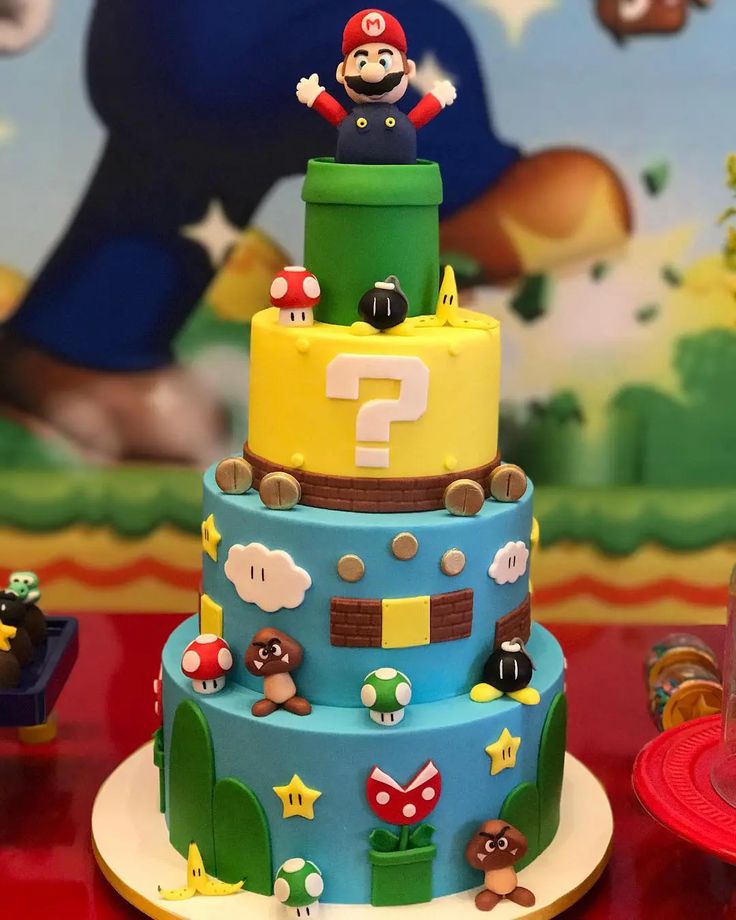
The Singapore Super Mario cake exists at the precise intersection where maternal labour meets capital’s demand for the commodification of joy, where the unpaid economy of care collides with the violent mathematics of profit extraction, and where the tenderness required to mark a child’s passage through time becomes another site of accumulation. To speak of these confections is to speak of invisible labour made visible through sugar, of love transformed into a commodity, of the ways capitalism enters even our most intimate celebrations and reorganises them according to its own hungry logic.
The Labour of Love Under Late Capitalism
In the humid heat of Singapore’s endless summer, women wake before dawn to begin the work that economic theory refuses to count. The Singapore super mario cake phenomenon reveals itself not as an innocent celebration but as another form of gendered labour disguised as choice, another way that care work expands to meet market demands whilst remaining structurally invisible and economically devalued.
Consider the mathematics of this labour:
- Time investment: Twelve hours of unpaid work consumed in minutes
- Skill requirement: Physical, emotional, aesthetic, and cognitive labour performed simultaneously
- Economic invisibility: A Complex artistic work that economic theory refuses to count
- Gendered expectations: Care work disguised as personal choice
“When I stay up all night working on a mario cake Singapore, I think about my grandmother who stayed up mending clothes by candlelight,” reflects one baker, her hands still dusted with edible gold powder. “The work never stops, it just changes shape. Now we mend childhood dreams instead of torn fabric.”
The Semiotics of Sweetness
The Singapore mario birthday cake operates within a complex sign system where every fondant mushroom carries the weight of cultural meaning, where each carefully piped detail represents not just craftsmanship but the successful performance of maternal devotion. These cakes function as both gift and proof, proof that love can be measured, that care can be purchased, that adequate parenting requires increasingly expensive demonstrations of commitment.
The iconography borrows from a digital universe created to generate profit, appropriating symbols designed by corporate committees and transforming them into expressions of personal affection. Yet this transformation is not innocent: it represents the successful colonisation of intimate family moments by commercial interests, the gradual replacement of cultural celebration traditions with branded entertainment products.
The child who requests a custom mario cake in Singapore has already been interpellated as a consumer, already taught that authentic joy requires specific commodified forms. The parent who fulfils this request participates in their own exploitation whilst believing they express love.
The Political Economy of Celebration
Singapore’s hypercompetitive social environment intensifies these dynamics, creating pressure systems where celebration becomes performance, where Mario-themed cake creations serve as visible markers of class position and parental adequacy. The island’s wealth disparities manifest themselves through buttercream techniques and fondant quality, creating new forms of social stratification measured in sugar craft precision.
The economy operates through familiar patterns of exploitation:
- Gendered labour extraction: Women’s unpaid time subsidises family celebration costs
- Skill devaluation: Complex artistic techniques priced below living wage standards
- Emotional manipulation: Children’s disappointment weaponised to ensure compliance
- Cultural displacement: Indigenous celebration forms replaced by corporate symbols
- Time poverty: Sleep and rest sacrificed to meet arbitrary celebration standards
These patterns reveal how capitalism penetrates even the most intimate spaces, transforming care into a commodity and love into labour whilst maintaining the fiction that market transactions represent authentic emotional expression.
Bodies, Time, and the Violence of Perfection
The production of a singapore super mario cake demands bodily sacrifice that remains unacknowledged:
- Physical injuries: Repetitive strain from detailed piping, chemical burns from food colouring
- Chronic conditions: Fatigue from overnight production schedules
- Temporal violence: Industrial efficiency demands conflict with care work rhythms
- Invisible costs: Bodies bearing the celebration’s true price whilst labour remains erased
The Mario character cake in Singapore exists within these contradictions, demanding speed whilst pretending to represent handmade care.
Resistance Within Submission
Yet within these structures of exploitation, forms of resistance emerge:
- Time boundaries: Bakers refusing unsustainable working hours
- Technical innovation: Developing labour-saving techniques whilst maintaining quality
- Value questioning: Challenging the relationship between effort and compensation
- Agency preservation: Small rebellions against maximum value extraction
The Nintendo Mario cake singapore becomes a site where questions of value, labour, and care crystallise into visible form.
The Sweetness of Solidarity
In the predawn darkness, whilst one woman pipes fondant flowers and another sculpts Mario figures, they participate unknowingly in a global economy of care that extends far beyond Singapore’s borders. Their labour connects them to women worldwide who wake early to prepare celebrations, who sacrifice sleep to create joy, who transform raw materials into love through invisible work.
Understanding these connections offers possibilities for different forms of organisation, different ways of valuing care, and different approaches to celebration that might prioritise human flourishing over profit extraction.
Conclusion: Sweet Contradictions
The phenomenon of elaborate celebration culture, crystallised perfectly in the Singapore Super Mario cake, reveals capitalism’s capacity to colonise our most intimate moments whilst maintaining the illusion of choice and personal expression. Yet within these contradictions lie possibilities for resistance, for different ways of organising care, for celebrations that might honour both children’s joy and the labour required to create it. Perhaps the most radical act would be to imagine celebrations that centre human flourishing rather than market participation, that value care work appropriately, that create space for authentic rather than commodified expressions of love, a transformation as sweet and necessary as any Singapore super mario cake.
